The Mystery of Stonehenge’s Altar Stone: Why Scientific Hypotheses Collapse
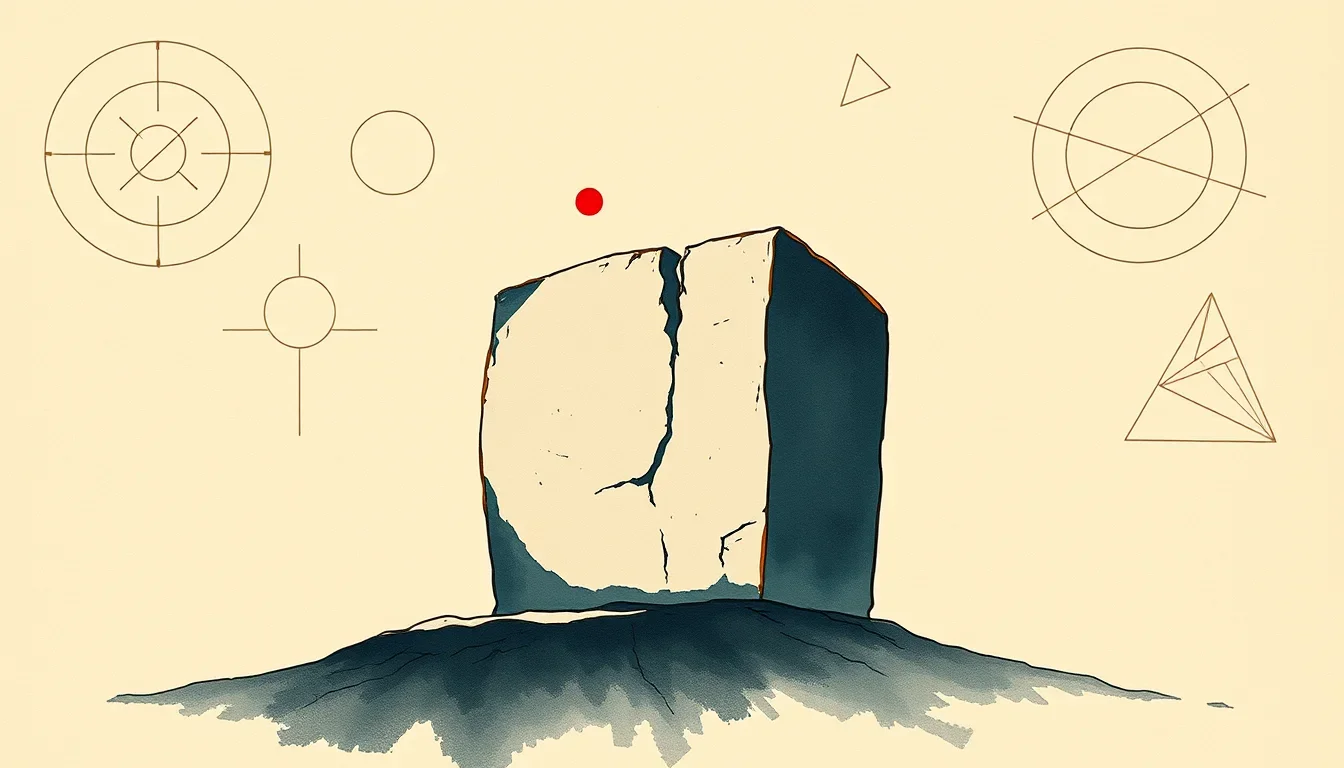
Even fundamental theories collapse under the pressure of precise facts: the new mystery of Stonehenge’s Altar Stone vividly demonstrates why scientific hypotheses collapse when businesses and researchers rely on superficial conclusions. The latest large-scale study of the ancient monument’s geological structure has overturned established ideas about megalith logistics. The famous Altar Stone, contrary to popular theories, does not have a confirmed Scottish origin, forcing marketers, strategists, and analysts to rethink the importance of rigorous data validation before making key decisions.
Geological Detective: What Scientists Discovered
An international team of researchers from the UK, Canada, Italy, and Sweden conducted an unprecedented analysis of the six-ton megalith. The results of the work, published in the Journal of the Geological Society, cast serious doubt on the high-profile 2024 hypothesis that the monolith was transported from the Orcadian Basin in Scotland—a record-breaking 750 kilometers from the construction site.
Key stages and findings of the research group:
- Methodology: Scientists created a detailed geological profile of the rock, studying isotopic characteristics, mineral composition, and the structure of microscopic zircon and apatite grains.
- Comparison: Over 70 control samples from the presumed Scottish region were selected and analyzed.
- Result: Not a single studied sample matched the characteristics of the megalith, which practically rules out the version of its transportation from the Orcadian Basin.
Empirical Analysis: How Much Can New Data Be Trusted?
This study represents a rigorous empirical analysis based on high-precision geochemical methods. Unlike early assumptions based on indirect signs, the current work is built on a direct comparison of the physical characteristics of the matter.
It is important to understand: scientists have not declared the mystery unsolvable—they have narrowed the search field by excluding an erroneous version. This is a textbook example of how updated metrics and facts transform established paradigms.
Lessons for Marketing and Analytics: Why Beautiful Theories Are Dangerous
The Stonehenge research story is an ideal illustration of the laws of marketing science and the psychology of data perception. For entrepreneurs and marketers, there are three fundamental conclusions embedded here:
- The danger of an attractive narrative: The hypothesis of complex Scottish logistics sounded impressive but shattered against objective facts. In business, any «beautiful» concept without a foundation in numbers leads to budget waste.
- The value of a negative result: Refuting a hypothesis is a strategic victory. Excluding a demonstrably false vector saves company resources and protects against scaling errors.
- Data Quality: The reliability of conclusions is directly proportional to the depth of the slice. Assessing campaign effectiveness based on superficial metrics (for example, CTR in isolation from LTV and ROI) is as dangerous as hasty archaeological conclusions.
Practical Application: How to Test Hypotheses in Business
To protect projects from errors caused by false hypotheses, use this step-by-step verification algorithm:

- Conduct a hard stress test: Before launching a large-scale advertising campaign, find the weak points in the basic concept and formulate counterarguments.
- Use Drill-down: Do not limit yourself to high-level dashboards. Analyze indicators at a micro level, investigating audience behavior as thoroughly as geologists study mineral grains.
- Acknowledge ineffective decisions: If a controlled A/B test shows the creative is unviable, perceive it as valuable input for optimization rather than a failure.
Frequently Asked Questions
Why is the Altar Stone of key importance to science?
It is the central megalith of the complex, possessing a unique mineral composition. Its origin determines the understanding of trade routes and engineering capabilities of the ancient era.
Does this discovery mean the monument has a local origin?
No, the question of origin remains open. The study has only reliably established that the original quarry has not yet been identified and the Scottish theory was not confirmed.
How does this scientific case project onto advertising?
It serves as a reminder of the need to double-check primary sources. If analytics look impeccably attractive, they require a deep stress test before making decisions about scaling.
Conclusion
Scientific discoveries prove: truth requires careful verification, not blind trust in authoritative myths. In advertising campaigns and strategic planning, objective data is your main tool for growth. Test the resilience of your current hypotheses, eliminate non-working combinations, and rely on proven figures to achieve measurable business results.
Source Naked Science ↗