Siri’s power is not in intelligence: why context beats AI intelligence
In the modern digital environment, context beats AI intelligence: a personal assistant with access to the user’s personal information easily outperforms the most advanced general-purpose neural network. For advertising specialists, marketers, and business owners, this conclusion formulates the key rule of advertising perception psychology: a deep understanding of the client’s current situation always proves more effective than abstract creativity and large budgets.
What Nielsen Norman Group Researchers Discovered
An analyst from the authoritative research agency Nielsen Norman Group conducted a practical experiment comparing the performance of three virtual assistants: the basic version of Siri, the updated Siri AI, and ChatGPT Plus (model GPT-5.6 Sol). The methodology and full test results are presented in the report The New Siri’s Biggest Strength Is Not Intelligence dated October 9, 2026.
The expert tested the systems on real everyday tasks after a trip to New York: filtering photos taken, extracting restaurant addresses from personal correspondence, and generating messages to a partner. The experiment demonstrated important patterns of interaction with artificial intelligence:
- Local context solves the task: Siri AI flawlessly identified three establishments mentioned in the dialogue with the brother and accounted for the fact that the author had not yet managed to visit them. Deprived of direct access to the message history, ChatGPT failed to cope with this task.
- Accuracy of request interpretation: on the command «show photos from New York from last weekend» Siri AI instantly opened the smartphone gallery (despite the absence of the pronoun «my»), whereas ChatGPT offered a selection of news footage from the web.
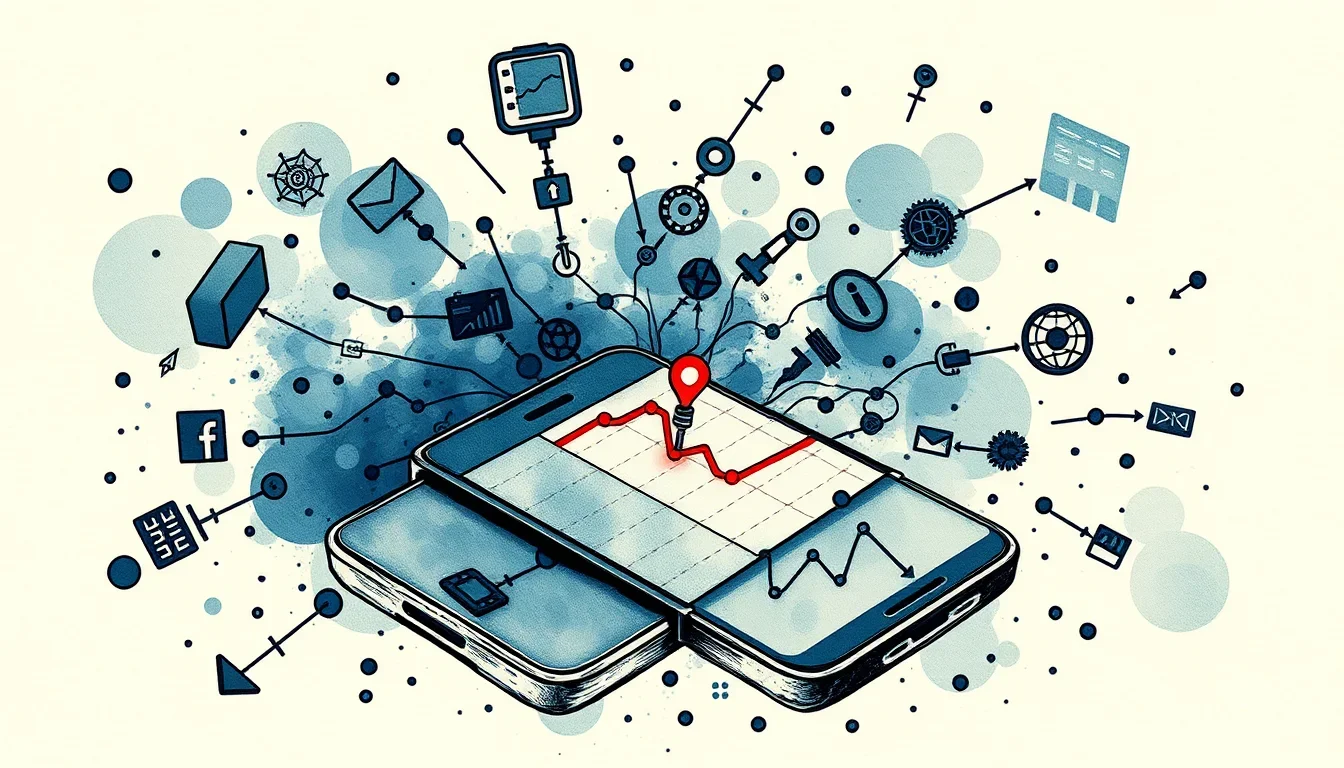
- End-to-end scenario failures: at the moment of passing parameters to the external environment (building a route via Google Maps), Siri AI lost the original starting point and indicated an incorrect address due to name homonymy («Dimes» instead of the city district «Dimes Square»).
The strength of a personal assistant lies not in the scale of computing power, but in seamless access to the user’s personal context here and now.
How Objective Are the Obtained Data
This experiment represents a qualitative usability study (hands-on exploration), not a quantitative statistical slice or a large-scale sociological survey. Testing was conducted by a single UX specialist on iPhone 14 and iPhone 18 Pro smartphones running iOS 27.
The described observations capture the real user experience of interacting with the interface. However, direct extrapolation of these findings to all digital processes requires consideration of methodological limitations.
A number of scenarios were reproduced only 1–2 times, while closed ecosystems with end-to-end encryption (for example, the Signal messenger) remained inaccessible for systemic indexing by the search agent.
What this means for marketing and advertising
User behavior when working with AI assistants reveals the fundamental mechanisms of consumer behavior, which are critically important for building advertising funnels:
- Relevance beats pure creativity: the audience chooses products that shorten the path to the result. Hitting the actual need of a person at the moment ensures sustainable growth in click-through rate (CTR) and final conversion.
- A gap in the path leads to immediate churn: if an ad makes a specific promise, but the landing page presents a generic formulation (similar to losing the coordinates of a starting point in a navigator), the campaign’s effectiveness drops dramatically. Seamless communication context must be preserved at every stage of the customer journey (CJM).
- Transparency of processes builds loyalty: performing hidden background operations without informing the audience (for example, the status «searching websites» when typing a private message) provokes doubts and destroys trust in the brand.
Practical application of the context principle
To integrate the research findings into current advertising campaigns, interfaces, and sales funnels, apply the step-by-step interaction optimization algorithm:
- Preserve the transition context: set up dynamic content and headline swapping on landing pages using URL parameters. Replace the generic headline «Buy a sofa» with a personalized offer: «Corner sofas in stock with delivery to Yekaterinburg» in strict accordance with the search query.
- Eliminate semantic ambiguity: if the product specification involves variable parameters, implement a short clarifying quiz before stating the price to avoid creating false expectations.
- Provide feedback during response delays: when an online calculator performs complex calculations, display explanatory statuses (for example, «Checking dimensions against the warehouse database») to reduce user anxiety during the wait.
Integration with the RGB Analytics methodology
Within the framework of RGB Analytics, the perception of a marketing message is strictly determined by the consumer’s psychotype and the current circumstances of the decision-making process:
- Rational segment (blue spectrum): requires maximum transparency of arguments, verifiable facts, and logical consistency. Hiding sources or vague formulations causes instant rejection of the offer by this group.
To determine the optimal balance of arguments, visual triggers, and communication tone tailored to the specifics of your segment, it is advisable to calculate the behavioral model of your target audience in advance.
Frequently Asked Questions (FAQ)
Why does ChatGPT fall behind Siri AI in solving applied everyday tasks?
The reason lies not in the power of neural network architectures, but in data isolation policies. Third-party language models do not have access to local smartphone databases (messages, media library geotags, contact lists), relying exclusively on external web sources.
How to implement personalization without violating user privacy?
Use contextual markers that do not require the collection of personal data: current geolocation at the city level, type of operating system and device, incoming traffic channel, time of day, and the sequence of visitor actions on the website.
Conclusion
The consumer is not looking for a demonstration of the system’s abstract intellectual capabilities—they expect a flawless, fast, and seamless solution to their current problem. Build your marketing channels so that the advertising message organically picks up the client’s context at every step of interaction.
To identify the dominant psychological triggers and precise decision-making patterns for your product, go to the system’s workspace: you can calculate your audience and optimize conversion right now.
Source Nielsen Norman Group ↗