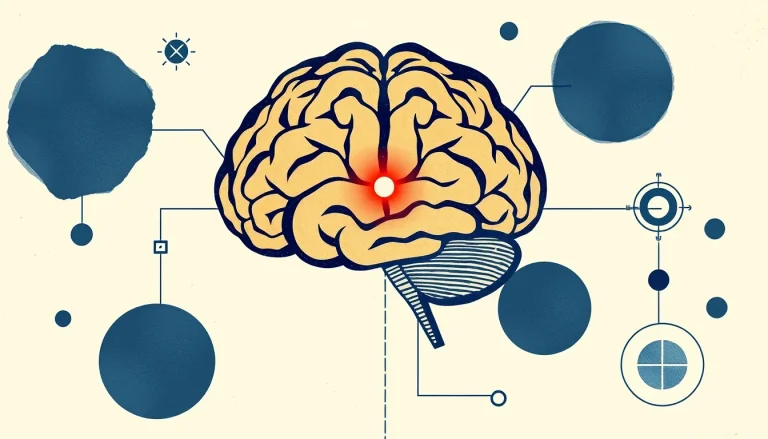
The Power of Internal Focalization: How Stories Change Audience Behavior

Internal focalization is a powerful storytelling tool capable of fundamentally changing how the audience perceives a brand. Empathy in marketing has long ceased to be abstract sympathy: today it is a concrete trust trigger that can effectively resolve customer objections and neutralize negativity. A recent cognitive study proved that showing a character’s unspoken inner experiences reshapes people’s perception and prompts them to forgive mistakes even in real life.
What the scientists found: the cognitive effect of narrative
A research team from the Project Narrative project at Ohio State University, led by Professor Angus Fletcher and social psychologist Mark Matthews, tested a literary device known as internal focalization. This is a narrative technique in which the author shows not the character’s external speech but their innermost stream of thoughts. The results of this large-scale work were published in the scientific journal Frontiers in Psychology.
In three experiments involving 1,563 people, the researchers tested the audience’s reaction to a story about an elderly woman, Mary, and a repairman. According to the plot, the repairman accidentally left the door open, and the heroine’s puppy ran out into the street.
The participants were divided into two groups with different ways of presenting the material:
- The first group was shown the culprit’s direct speech: «The repairman said to Mary: ‘I wish I had closed the door.'».
- The second group was shown his sincere inner feelings: «The repairman thought to himself: ‘I wish I had closed the door.'».
Access to the hero’s secret repentance did not simply dispel righteous anger toward the fictional character. The most interesting part came next: participants who forgave the story’s hero statistically more often and more readily let go of long-standing grudges against real people in their personal lives.
Thus, literary empathy worked as powerful cognitive priming for lowering psychological defense barriers.
Methodology and evidence base: how much can the results be trusted
This is a series of three preregistered controlled experiments (with samples of N=371, N=449, and N=743, respectively) with a total research base of over 1,500 respondents. Such a methodology forms a solid evidence base that completely rules out chance thanks to sequential replication of the effect.
However, practicing marketers should bear in mind the context of the experiment: the respondents evaluated a short text scenario in artificial laboratory conditions. In real advertising, the consumer is continuously bombarded with information stimuli, so getting them to stop and thoughtfully read an internal monologue is noticeably more difficult.
Moreover, this case recorded a short-term psychological shift, not a lifelong change in human behavior patterns.
Significance for commercial communications and advertising
When a business makes a mistake — missing deadlines, releasing raw software, or suddenly raising rates — marketers typically resort to template corporate apologies along the lines of «we’re so sorry, your opinion is incredibly important to us.» The consumer instantly detects the insincerity, which only increases the level of negativity and customer churn.
The principle of internal focalization vividly confirms: trust and sincere forgiveness arise only at the moment when the target audience sees the real behind-the-scenes and the team’s honest reflection. In content marketing and brand storytelling, shifting the focus from faceless slogans to the genuine experiences of creators repeatedly lowers the resistance threshold, directly affecting consumer behavior and increasing conversion in emotionally charged niches.
Practical application: translating theory into conversions
To turn the described psychological phenomenon into an applied influence tool, adjust the tone of communications at key touchpoints:
- Crisis PR: abandon dry press releases in favor of an open first-person letter from the founder, product owner, or team lead.
Before: «The company sincerely apologizes for the temporary server outage.»
After: «At three in the morning, when the database crashed, I sat in front of the monitor and realized with horror that I had failed a thousand entrepreneurs whose sales had come to a complete standstill right at that moment.» - Customer cases and reviews: highlight in detail the buyer’s doubts before concluding the deal, not just the ideal final result. Broadcast clients’ monologues about what exactly they were afraid of and what they painfully thought about before placing the order.
- Complex B2B products: implement a detailed breakdown of failures (honest fail stories) in the process of developing features. This will show real engineering expertise and deep involvement of specialists.
Integration with the RGB-Аналитики methodology
In the RGB-Аналитики system, this effect correlates with the precise calibration of the «Emotional Tone» and «Trust Drivers» scales. The vulnerability demonstrated by a character or speaker in an ad creative resonates exceptionally well with segments that have a high level of empathy and a pronounced need for psychological safety.
At the same time, for an emphatically rational, status-oriented, or pragmatic audience, the author’s deep introspection will seem like a sign of weakness and unprofessionalism. Representatives of this segment require strict metrics, firm guarantees, and step-by-step algorithms for solving problems.
To clearly delineate where heartfelt monologues will generate loyalty and where they will inevitably destroy conversion, it is critically necessary to first research the psychographic profile of the target audience.
Frequently Asked Questions (FAQ)
Does the internal focalization technique work in short banners?
In static formats sized 300×250, unfolding a full stream of thoughts is technically difficult. However, the technique demonstrates outstanding effectiveness in video creatives through a first-person voiceover, as well as in long promotional articles, email newsletters, and landing pages.
Can this method be used if the brand has never made mistakes?
Absolutely. Internal focalization excellently reveals the process of developing product value. Show the design engineer’s doubts, the designer’s creative impasse, or the sincere experiences of customer care specialists during difficult communication with a client.
Conclusion
The faceless marketing of bare facts invariably yields to honest human experience. A thoughtful demonstration of the inner world of product creators transforms hardened skeptics into devoted brand advocates and permanently removes communication barriers.
Strive to flawlessly determine which hidden motives drive your customers to make purchases? Use the capabilities of RGB-Аналитики: go to the system to calculate a personalized interaction model and develop the perfect presentation of ad creatives tailored to the psychographics of your segment.