Risk-Taking in Advertising: What Drives People to Impulsive Purchases

Understanding how risk propensity in advertising is formed allows marketers and business owners to more accurately manage consumer behavior and stimulate impulsive purchases without losing trust. The latest neurobiological discoveries confirm: the readiness to perform a spontaneous action matures long before the act itself.
Risk propensity increases before a person performs an impulsive or compulsive action, rather than as a result of it. This fundamental discovery shows: it is not external stress or external triggers that suddenly break self-control — the decision to take a risk matures in advance at the level of basic probability assessment and readiness to process incoming data.
Neurobiology of Spontaneous Decisions: what scientists have discovered
Scientists from the University Hospital of Würzburg and the Dresden University of Technology, led by Hilmar Zecha and Lorenz Deserno, conducted a large-scale study published in the scientific journal Biological Psychiatry: Cognitive Neuroscience and Neuroimaging. The experiment involved 603 individuals with mild to moderate forms of addictive disorders.
Throughout the year, participants recorded their behavior every two days and underwent monthly gamified cognitive tests on their smartphones. The authors assessed parameters such as working memory, motor inhibition, risk tolerance, and information-gathering strategies before decision-making.
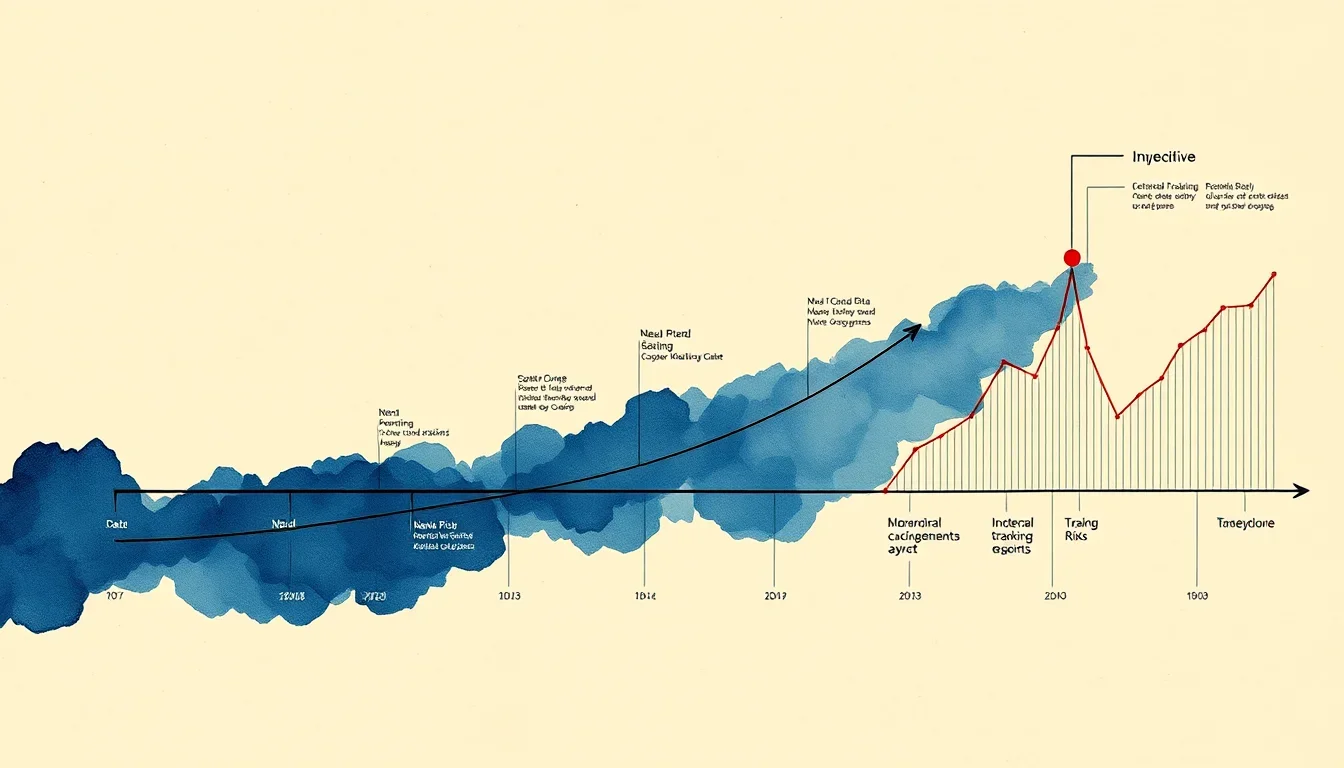
The figures revealed a strict causal relationship: if a person’s willingness to take risks in gambling scenarios increased and their need to gather facts before making a choice decreased sharply in the current month, a compulsive behavior relapse was guaranteed in the following period.
At the same time, no feedback loop was detected: the addictive behavior itself did not worsen cognitive test results in future periods. This confirms the primacy of internal cognitive shifts.
Data Reliability and Study Limitations
This is a full-scale longitudinal study using the Ecological Momentary Assessment method on a large sample (603 people over 12 months). Unlike standard retrospective surveys, data were collected in real-time via mobile applications. Correction for autocorrelation statistically confirmed that the observed effect is strictly unidirectional.
There is one limitation here, but it is conceptually important: the study focused on individuals with a predisposition to addictive behavior. One cannot extrapolate exact figures to absolutely every consumer.
However, the basic decision-making mechanics under conditions of uncertainty and time scarcity are universal to the prefrontal cortex function of any human being.
What this means for advertising and marketing psychology
To optimize the sales funnel and create high-converting creatives, these scientific findings provide direct applied insights:
- Conversion depends on the cognitive profile: an impulsive response occurs not because «willpower» is switched off, but due to a temporary decrease in the need to check and verify information.
- Reduced vigilance as a driver: when the target audience is tired or overwhelmed by routine, their readiness to participate in mixed mechanics («try and win») naturally increases.
- Rejection of long proofs: in moments of increased risk, consumers deliberately ignore detailed comparison tables and react more actively to a simple challenge.
How to apply risk mechanics in advertising creatives
If you sell products with a short sales cycle or compete in overheated B2C niches, use the following steps to adapt your content:
- Remove unnecessary verification steps: if the offer is designed for a quick purchase, reduce screens with long lists of characteristics to two or three bright talking points.
- Add mixed risk mechanics: instead of a standard direct discount, implement interactivity—for example, gamification, a «wheel of fortune» mechanic, or an additional hidden bonus when placing an order right now.
- Change the delivery of value and contrast:
Behavioral segmentation: how RGB-Analytica accounts for thisWas: «Study the detailed 40-page report before ordering a consultation.»
Became: «Get an audit in 1 click and find out where you are losing your budget right now.»
In the RGB-Analytica methodology, this behavioral pattern directly correlates with the Drivers scale (the balance between impulse and safety) and the Delivery scale (rational proof versus emotional engagement).
Consumers with a predominance of the red spectrum tend toward rapid risk, dynamic visual forms, and minimal preliminary data collection. For them, high contrast, large accents, and clear calls to immediate action are effective.
The blue spectrum, on the contrary, is oriented toward predictability, strict geometry, and deep social proof. Attempting to impose unjustified risk on such an audience without argumentation instantly nullifies CTR, destroys trust, and leads to lead loss.
Frequently Asked Questions
Is it true that impulsive purchases are made solely due to weak self-control?
No. Research confirms that basic cognitive functions (including working memory and motor inhibition) remain stable. Only the person’s readiness to gather facts before making a choice changes critically.
Should the block with reviews and certificates be completely removed from the landing page?
No, objective confirmation of reliability is critically important for rational segments. However, for offers with a high level of spontaneity, it is advisable to move them below the first screen so as not to overload the path to the target action with unnecessary obstacles.
Conclusion
User behavior in the digital environment is heterogeneous: the same trigger can push one client to order in seconds, while causing doubt and departure from the site for another. To make creatives work with maximum efficiency, it is important to understand the cognitive profile of your segment in advance. Stop testing hypotheses blindly—use specialized analysis tools to accurately tune the advertising delivery to the psychology of your audience.
Source Neuroscience News ↗