Mysteries of the Solar System: How Our Knowledge of Space Is Changing
Mysteries of the Solar System demonstrate vividly: even immutable scientific dogmas crumble under the onslaught of new data, forcing researchers to completely change research paradigms. In marketing and advertising, similar laws apply: what was considered fundamental knowledge about consumer behavior yesterday today turns into a cognitive distortion and leads to budget loss. The familiar picture of the world requires regular revision, whether it’s planet geology or decision-making psychology.
The Solar System has long ceased to be for us an understandable «picture» from a textbook. Modern research shows that established ideas about the structure of planets and asteroids require serious revision. This directly affects how we plan future space missions and assess the chances of detecting extraterrestrial life.
What Researchers Discovered: Fundamental Shifts
According to a review published in the journal Naked Science, study of the Solar System has entered a stage of detailed analysis of composition and geology. Here are key facts from recent years:
- Меркурий: 2024 models allow that a layer of diamonds may have formed in the planet’s interior, and the presence of water ice at the poles’ craters puts into question the theory of its «burned» history.
- Венера: Analysis of Magellan spacecraft images (1990s), conducted in 2024, revealed signs of recent volcanic activity. This makes the «twin of Earth» a geologically living world.
- Марс: InSight mission data indicate possible presence of liquid water at a depth of 11–20 kilometers, although the scientific community continues to discuss the volumes of this reservoir.
- Малые тела: The boundary between asteroids and comets is finally blurred. Samples from the asteroid Рюгу proved that even «stone» objects contain organic matter and traces of water interaction.
How Much to Believe This: Verification and interpretation of signals
Most of the presented data is based on indirect analysis methods: gravitational modeling, radiolocation, and study of magnetic fields. These are not direct observations, but interpretation of signals.
For example, the «diamond layer» hypothesis of Mercury is a mathematical model, not a fact confirmed by drilling. Conclusions about water on Mars also remain subject to debate: in 2025, alternative interpretations of InSight data emerged, suggesting much smaller fluid volumes.
What This Means for Advertising and Marketing Psychology
As founder of RGB-Аналитики, I see a direct parallel between marketing communications and consumer behavior:
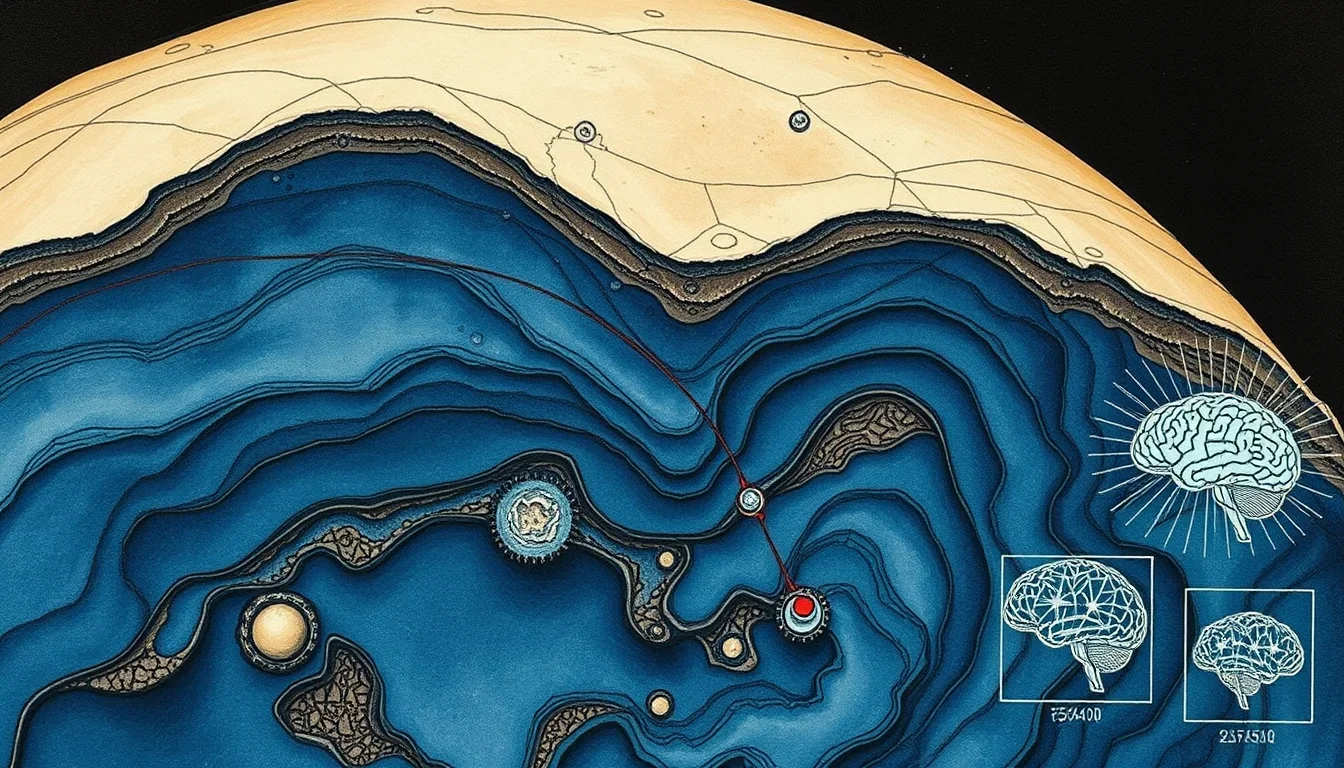
- Adaptability of data: Just like planetary geologists, marketers cannot rely on «old maps» (studies from past years). Audience behavior patterns transform just as swiftly as models of Veneran atmosphere formation.
- Context matters more than form: An asteroid like Ryugu outwardly appears to be an ordinary rock, but inside it hides a complex history. In creativity, the visual component is merely 20% of success; the remaining 80% is hidden content and a relevant offer, precisely hitting the audience’s pain.
- Indirect signs: We often evaluate campaign effectiveness superficially based on primary clicks, forgetting deep behavioral metrics — Retention and LTV. Don’t look for easy answers on the surface; analyze the customer journey comprehensively.
Practical Application: How to Implement a Scientific Approach in Strategy
- Reexamine your axioms: If you are sure your segment «won’t buy a pricey product,» check whether you rely on outdated metrics from 2020. Conduct fresh A/B testing or deep audience research.
- Seek hidden oceans: Identify non-obvious advantages of your product and make them the core of positioning. Consumers seek meaningful depth and value, not just an aesthetically pleasing visual row.
- Test hypotheses: Act by the methods of proof-based science. If a creative concept is not confirmed by real indicators (CTR, conversion), don’t try to fit facts into the desired outcome — change variables: tone of voice, value proposition, and CTA.
Frequently Asked Questions
Why do we still not know if there is life on Mars?
Because specialists operate only with indirect evidence. For an unequivocal answer, physical soil samples researched in a laboratory are required, not just telemetry and images from orbital spacecraft.
How does RGB-Аналитика help with marketing tasks?
We use RGB-Аналитику, to exclude subjective guesses about which communication will work better. The system thoroughly evaluates psychotypes, motivation drivers and visual triggers, turning a strict analytical approach into result-oriented creative solutions.
Conclusion
Cosmos and marketing sciences are surprisingly similar: the deeper we dive into the subject, the more obvious the incompleteness of basic hypotheses become. Stop relying on outdated stereotypes and regularly review commercial strategies based on objective measurements.
Ready to transition from intuitive marketing to precise behavioral models? Analyze your target audience with RGB-Аналитики right now, to create advertising campaigns that hit the bullseye.
Source Naked Science ↗