Artificial Intelligence in Marketing: Why Leaders Are Reshaping Teams
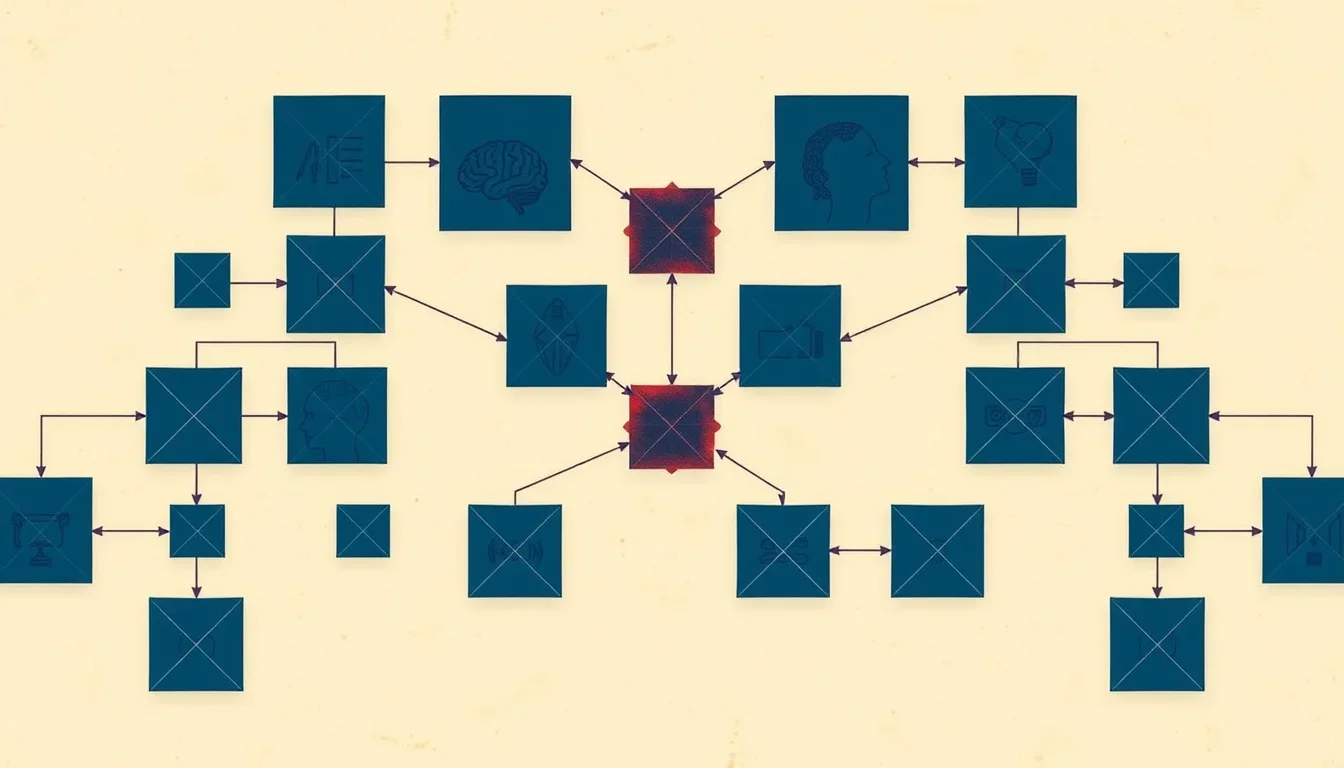
Artificial intelligence in marketing is rapidly transforming the rules of the game: while newcomers test image generation, industry leaders are fundamentally restructuring the organizational structure of companies. If your B2B offer still promises the marketing director the banal «saving a couple of hours on copy«, you are guaranteed to miss the mark and lose paying customers.
Anatomy of the Trend: Why Leaders Are Reshaping Teams
The publication Marketing Week released large-scale data showing that marketers from the most successful companies are four times more likely to fully restructure their teams around AI than lagging competitors. Systemic players think big: top performers are twice as likely to work from a single unified centralized roadmap for adopting advanced technologies.
In parallel, Gartner analysts recorded a decisive shift toward operational optimization: one in five marketing directors (20%) has already cut positions due to workflow automation. The market is going through an inevitable phase of shedding the excess: businesses are trying to shift AI from primitive time savings toward generating real business efficiency and pure revenue.
A Critical Look at the Numbers: Correlation or Causation?
What we have here is a classic industry survey of opinion leaders and analytics from consulting agencies. In marketing science, it is important to keep a cool head: what is recorded here is a strict correlation, not a direct causal relationship.
Companies are successful not necessarily because they rushed to reshape their staffing around AI. It is quite possible that resilient leaders simply have larger budgets for risky organizational experiments and can afford large-scale reorganization.
The psychological shift is obvious: successful leaders think systematically in terms of infrastructure and manageability, while outsiders chaotically hand out paid chatbot subscriptions to employees.
B2B Client Psychology: What It Means for Advertising
If you sell B2B products, technology services, or software for agencies, forget the cliché about «generating 100 posts in 5 minutes». Decision-makers (DMs) rely on entirely different triggers:

- Shifting focus from savings to performance: the era of childlike delight at the speed of AI is over. Directors now care about measurable return on investment (ROI), predictability of results, and preserving long-term client relationships.
- The pain of scaling: a systematic Chief Marketing Officer (CMO) looks for solutions that seamlessly embed into all of the company’s business processes, not scattered point utilities for individual specialists.
- Fear of losing control: chaotic automation blurs the customer experience and degrades quality. For this reason, demand is growing for tools that guarantee transparency, data security, and end-to-end quality control.
Practical Application: How to Rebuild Your Offers
To hook pragmatic executives, transform your ad creatives and positioning strategy in three key steps:
- Change your value proposition: instead of promises like «our service will free up your copywriter», clearly demonstrate how the tool helps structure analytics for confidently defending the marketing budget before the CFO.
- Communicate security and a systematic approach: show easy integration of the solution into the company’s existing roadmap. Sell not just access to a personal dashboard, but ready-made guidelines, staff training, and an implementation methodology.
- Test mature, pragmatic messages:
- Before: «Create content 3 times faster with AI».
- After: «An end-to-end AI system for marketing: strict performance control and transparent reports for the board of directors».
Frequently Asked Questions
Is it true that AI is mass-replacing marketers?
Analyst data confirms the elimination of roughly 20% of basic positions, but this refers exclusively to the automation of routine work. Specialists capable of managing strategy, complex technical systems, and deep brand context are only becoming more valuable and in demand on the market.
What do top managers look for when choosing AI software?
First and foremost, decision-makers evaluate the overall manageability of the solution, the information security of corporate data, and the ability to centrally control the entire workgroup under unified standards.
Summary and Key Takeaways
The psychology of today’s top managers is utterly pragmatic: they buy not AI features, but order, risk control, and a transparent vector of business growth. Adapt your communication to the real pains of executives to sell value, not cheap tech tricks.
Want to learn which hidden triggers and arguments will work specifically in your niche? Take advantage of our RGB-Analytics service — we will help you calculate precise positioning accents for successfully capturing your target audience segment.
Source Marketing Week ↗