The ‘lark’ genes: how the northern climate changed human biology
The ‘lark’ genes: how the northern climate changed human biology
Genetic predisposition to early rising became the result of our ancestors’ adaptation to life in northern latitudes. The study shows how changes in the light regime shaped modern human biological rhythms, and why understanding this biological basis is critically important for precise targeting in marketing.
What the researchers found
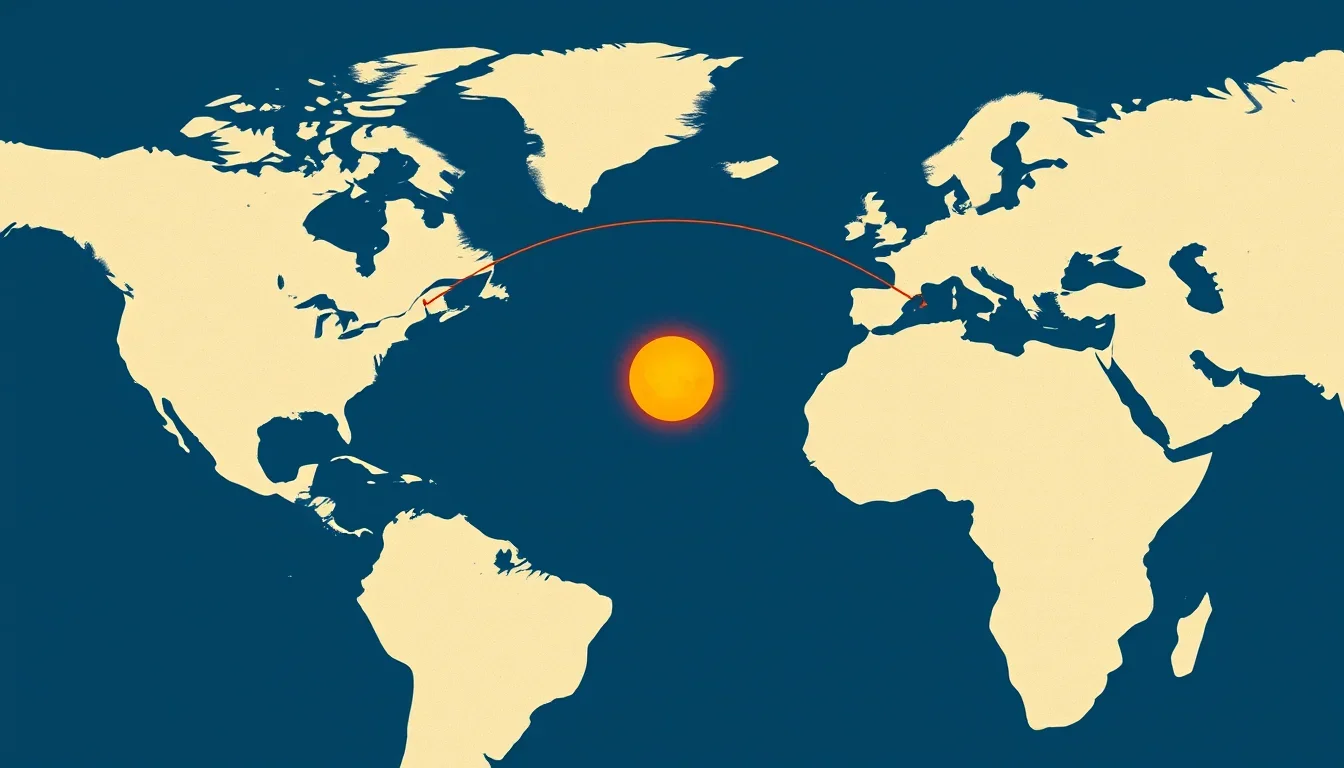
Scientists from Kyushu University and Niigata University (Japan), whose work was published on the bioRxiv platform, analyzed genetic data from hundreds of thousands of people. The researchers correlated the tendency toward a ‘morning’ chronotype with the geography of Homo sapiens settlement.
- Key marker: the proportion of ‘lark’ genes increases sharply after 20 degrees north latitude (the area of the Tropic of Cancer).
- Second stage: further consolidation of these traits is observed when moving above 40 degrees latitude.
- Evolutionary advantage: the morning activity type helped better synchronize the body’s internal clock with the changing length of daylight.
Interestingly, Neanderthals had significantly lower ‘morning’ chronotype indicators than Homo sapiens, who mastered high latitudes. This suggests that it was precisely our capacity for such biological adaptation that gave our ancestors an evolutionary advantage in surviving harsh conditions.
How much to trust this
This work represents a large-scale population study based on polygenic score estimation methods. The scientists recorded clear traces of natural selection in DNA regions responsible for circadian rhythms.
It is important to understand that this study reveals a correlation between genetics and settlement geography, confirming the hypothesis of adaptation to light. However, it does not rule out the influence of other environmental factors that remain to be studied in the future.
What this means for marketing
Although the study is devoted to anthropology, the conclusions for marketers and business owners are obvious: the biological clock of the audience depends directly on the region of residence.

‘Adaptive restructuring helped ancient people cope with seasonal changes, which cemented the morning chronotype as the dominant survival strategy in northern latitudes.’
This confirms the importance of taking regional specifics into account when planning advertising campaigns. People in northern latitudes have historically been more inclined toward morning activity, which affects their behavior online and response to offers.
How to apply this in business
Using chronotype data can increase the effectiveness of advertising campaigns by hitting the user’s ‘activity window.’
- Time-based targeting: in northern regions, launch reach campaigns in the morning hours (from 7:00 to 9:00), when ‘larks’ are most active.
- Content plan: adapt the timing of posts and newsletters to time zones and climatic zones, keeping in mind that audiences in northern regions may ‘wake up’ earlier.
- Offers: use morning triggers (e.g., ‘Hurry before lunch’) for the northern audience, as they psychologically resonate better with the biologically conditioned rhythm of life.
| Region | Predominant chronotype | Reach recommendation |
|---|---|---|
| Northern latitudes | Morning (larks) | Focus on 07:00–10:00 |
| Equatorial zones | Mixed | Even distribution |
Frequently asked questions
Does geography affect consumer behavior today?
Yes, the climatic and light conditions of a region directly affect lifestyle. Knowing the chronotype of the target audience helps set ad display timing more precisely.
Should the strategy be changed for southern regions?
In regions closer to the equator, daylight is more stable, so a strict tie to ‘morning’ triggers may be less effective than for northerners.
Conclusion
The genetics of ‘larks’ is direct proof of how the environment shapes human behavior. Using this data makes communication with customers more natural and timely. Want to learn how to optimize your campaign schedule for your audience’s specifics? Calculate the optimal reach parameters in RGB-Analytics right now.
Source Naked Science ↗